What Is AEO (Answer Engine Optimization)? A 2026 Guide
AEO is the practice of optimizing content to win featured snippets and AI answer boxes. Here's what it means, how it differs from SEO and GEO, and how to do it.
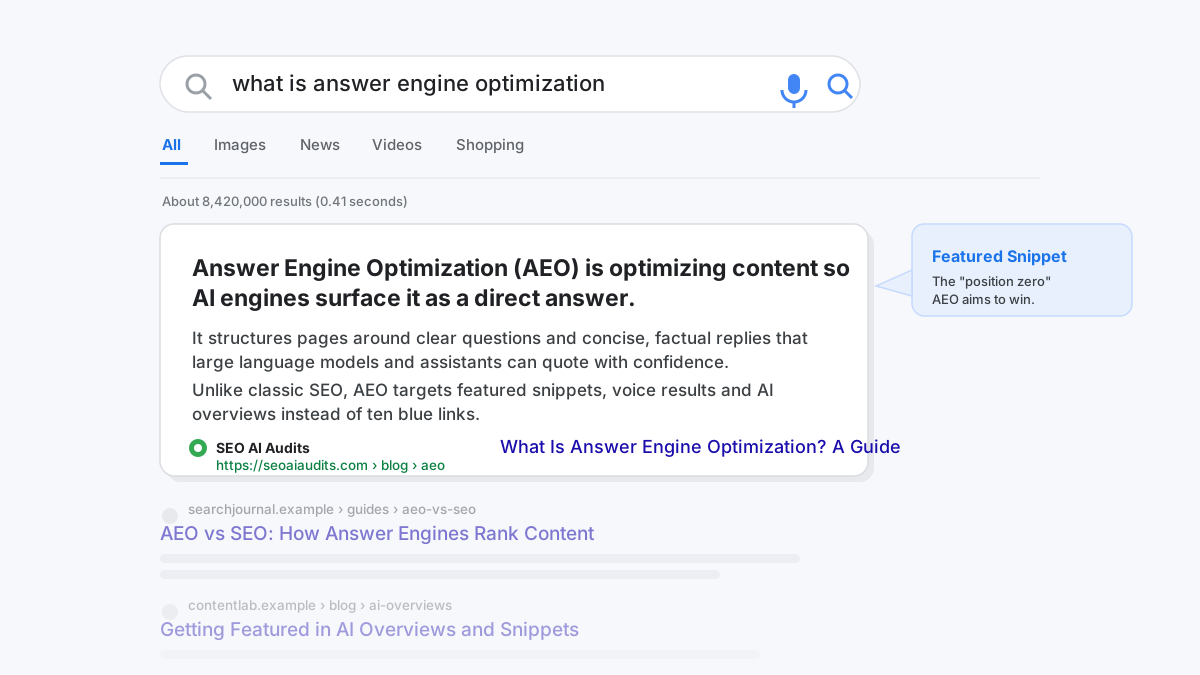
There is a spot in Google search that ranks above position one. It appears before any organic results, often before the ads, and when you win it, you're effectively the only answer visible without scrolling.
That's a featured snippet. Earning that spot — along with AI answer boxes, voice results, and People Also Ask placements — has a name: Answer Engine Optimization, or AEO.
Classic SEO gets you a high ranking and a click. AEO gets you the answer box, sometimes with no click needed at all.
Why "no click" isn't actually the scary part
When featured snippets first appeared, the worry was traffic cannibalisation. A fully answered question means the user doesn't visit your site. That concern is real. But it misses the bigger shift.
Here's what actually happens. The same concise passage that wins a featured snippet is the text Google reuses in AI Overviews, that Siri and Alexa read aloud, and that a chatbot pulls when assembling an answer. Optimising for extractability isn't chasing one feature in one context. It's making your content reusable across every surface where answers get assembled.
There's also a credibility effect. Being the cited answer positions you as the authority on that question, even for visitors who do click through afterward. People who arrive having already seen your answer quoted tend to trust the site before they land.
AEO vs. SEO vs. GEO: keeping the acronyms straight
These overlap heavily and you don't have to choose between them. Each one just has a different primary target.
| Term | What it optimises for | The win |
|---|---|---|
| SEO | Rankings in traditional search results | A high position and a click |
| AEO | Featured snippets, answer boxes, voice results | Being the extracted answer |
| GEO | Citations inside generative AI responses | Being a named source in the AI's answer |
SEO gets you ranked, AEO gets you quoted, and GEO gets you cited. AEO and GEO are close cousins because both reward the same underlying quality: clean, self-contained passages that can be lifted without surrounding context. Get AEO right and you've done most of the groundwork for GEO already.
What actually gets you into answer boxes
None of this requires special tricks. It's disciplined writing and a small amount of structured data.
Answer the question before you explain it
This is the habit that moves the needle more than anything else. When a section poses a question, state a clear, complete answer in the first sentence or two — roughly 40 to 55 words — then expand underneath.
A passage that only makes sense after three paragraphs of setup cannot be extracted, no matter how well-written those paragraphs are. A useful self-check: read just your opening sentence in isolation. Does it fully answer the heading on its own? If yes, you're in snippet territory.
Write headings as real questions
"What is AEO?" and "How do I win a featured snippet?" map directly onto search queries and the People Also Ask format. Vague headings like "Overview" or "Background" don't help the parser understand what question a section answers.
Match the format to the question type
Different queries earn different snippet shapes. Structure the answer accordingly:
- Definition queries ("what is X?") want a tight one or two sentence paragraph.
- Process queries ("how do I X?") want numbered steps in order.
- Comparison queries ("X vs Y") want a table or a side-by-side list.
- Specific facts (dates, thresholds, prices) want the number stated plainly, not buried mid-sentence.
If you want a list snippet, give the engine a real list. Format follows intent.
Add FAQ and HowTo structured data
FAQPage schema marks up your question-and-answer pairs. HowTo schema marks up ordered instructions. Neither guarantees a snippet, but both remove ambiguity about what your content is, which makes you considerably easier to feature.
One important note: the on-page content must actually match the schema. Marking up answers that aren't visible on the page violates Google's guidelines and won't help.
Keep quotable passages short
Answer boxes have limited space. Featured snippets run around 40 to 55 words; voice answers are often shorter. A 120-word paragraph will be truncated or skipped. Write the core answer tight, then add nuance in the sentences that follow for the readers who want depth.
Be specific, not impressive
Concrete facts win answers. "Improves load time" is too vague to quote with confidence. "Cuts Largest Contentful Paint below the 2.5-second threshold" is specific enough to lift verbatim. Numbers, named entities, and precise thresholds give a search engine something it can surface. Marketing adjectives give it nothing.
How do you know if your pages are answer-ready?
Read your page the way a machine does. For each section: can you point to one or two sentences that completely answer the heading on their own? Are headings phrased as the questions people actually ask? Does the format match the question type? Is there schema markup backing the Q&A and process content?
If you want a faster read, the AI Retrieval Checker scores how extractable a page's content actually is and flags spots where answers are buried too deep to lift.
AEO is really what happens when you write clearly enough that a machine can find your answer without help. The same habits that win a featured snippet — leading with the answer, being specific, matching format to intent — make your page easier for a person to skim too.
Want to see how answer-ready your site is? A free SEO audit checks structure, headings, schema, and snippet potential in about a minute, no signup required.
Kaustav Basak is the creator of SEO AI Audits, a free AI-powered SEO toolkit. He writes about technical SEO, Core Web Vitals, and how search is changing in the age of AI assistants.
Put this into practice — free
Run a complete, AI-powered SEO audit of your site in about a minute. No signup.